Gas Line Repair & Inspection in Grymes Hill, Staten Island
Certified gas piping diagnostics, high-precision pressure testing, appliance hookups, and code-mandated gas inspections for properties across Grymes Hill and adjacent Richmond County communities.
Mandatory Gas Safety Notice: If You Smell Gas
If anyone smells sulfur or rotten eggs, hears a hissing noise near gas lines, or suspects an active gas leak, evacuate the building immediately.
- Do NOT flip light switches, operate electrical appliances, or pick up a landline phone.
- Do NOT strike matches, use lighters, or introduce any ignition source.
- Leave doors open as you exit to assist ventilation only if safe to do so.
- Once safely outside and clear of the property, dial 911 and the gas utility (National Grid: 718-643-4050).
- Do NOT call a plumbing contractor first or attempt to locate the leak yourself. Plumbers are dispatched only after the site has been rendered safe by emergency personnel.
Rigorous Gas Line Diagnostics & NYC Compliance
Ensuring fuel safety, appliance efficiency, and regulatory compliance across residential buildings.
Certified Pressure Testing
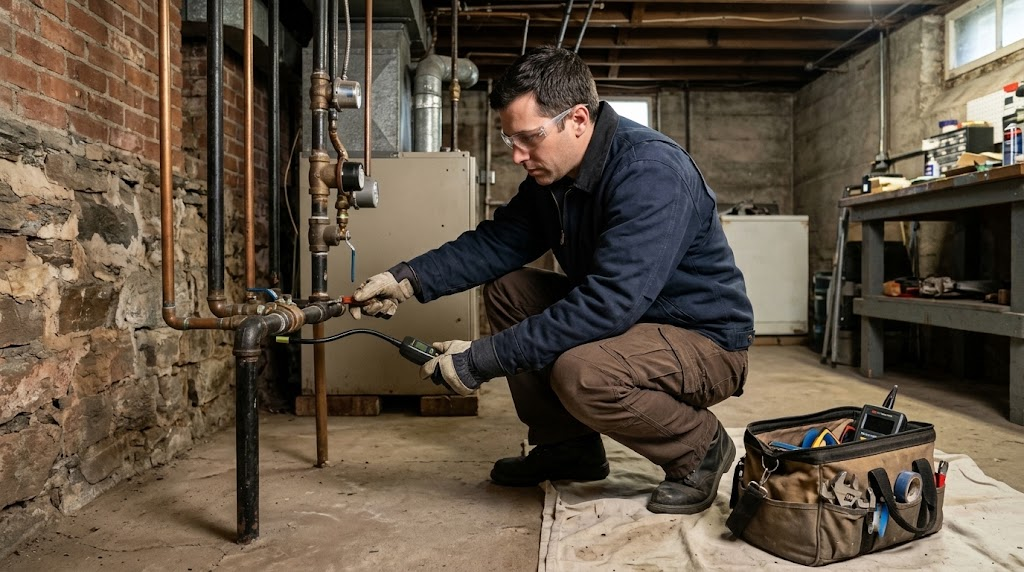
We execute high-accuracy manometer and mercury-free diaphragm pressure testing to confirm absolute gas system integrity. Whether testing prior to boiler activation or verifying line tightness after an outage, we pinpoint minute micro-fissures in threaded black iron and corrugated stainless steel lines.
Piping Repair & Relocation
Aging mechanical basements throughout Grymes Hill often feature threaded steel gas lines exposed to ambient dampness and mechanical abrasion. We replace rusted risers, rebuild manifold headers, correct undersized pipe runs, and install dedicated shutoff valves for boilers, furnaces, and kitchen appliances.
NYC Local Law 152 Inspections
Under New York City Local Law 152, multi-family properties (Class R-2 buildings with 3 or more dwelling units) must undergo periodic visual and instrument-based gas piping inspections by a qualified Licensed Master Plumber. We inspect exposed gas piping, identify uncertified conditions, and submit required GPS-1 certification filings.
Understanding NYC Gas Work Regulations
Due to the extreme safety considerations surrounding combustible fuel delivery, New York City enforces some of the strictest gas piping regulations in North America. Under the NYC Fuel Gas Code, all gas line repairs, alterations, meter resets, and new appliance installations require permits filed through the Department of Buildings (DOB) and execution by a Licensed Master Plumber (LMP).
When gas service has been shut off by the utility following an emergency report or pressure decay, restoring service requires a systematic process: isolating the line, replacing corroded fittings, conducting an integrity test observed by NYC DOB or utility inspectors, and securing a formal gas authorization before the meter can be unlocked.
Frequently Asked Questions on Gas Systems
Clear, practical guidance on gas service, safety regulations, and building requirements.
An emergency gas leak involves any noticeable odor of mercaptan (rotten eggs), whistling or hissing at fittings, or physical symptoms like dizziness. In an emergency, occupants must evacuate immediately and contact 911 and National Grid from outside. A routine gas call involves planned appliance connections (such as hookups for new boilers or ranges), scheduled Local Law 152 inspections, or preventative replacement of aged surface piping where no active leak exists.
Local Law 152 applies to buildings classified as Group R-2 (residential buildings with three or more dwelling units) and other commercial occupancies. Single-family (Group R-3) and two-family homes are generally exempt from mandatory periodic LL152 filings, though voluntary inspections remain highly recommended to ensure boiler and heater safety.
NYC Building Code requires an accessible manual shutoff valve installed within six feet of each appliance, in the same room. This permits servicing of a single heating unit or range without having to isolate the main building gas meter, minimizing disruption and enhancing homeowner safety during routine maintenance.